
Website Speed Optimization for Hosting: How Faster Websites Improve SEO, Conversions & Revenue in 2026
Introduction
Website speed has become one of the most important ranking and conversion factors on the modern internet. Visitors expect websites to load instantly, and search engines reward fast-performing websites with better rankings.
Studies consistently show that even a one-second delay in page loading can significantly reduce user engagement, conversion rates, and customer satisfaction. For businesses operating eCommerce stores, SaaS platforms, corporate websites, or content-driven websites, performance directly impacts revenue.
In 2026, website speed optimization is no longer optional. It is a critical component of SEO, user experience, and online business growth.
This guide explains how website speed affects rankings, conversions, and hosting performance while outlining practical strategies to build faster websites.
Why Website Speed Matters
Website visitors have become increasingly impatient.
When a website takes too long to load, users often leave before the page finishes rendering.
Slow websites typically experience:
Higher bounce rates
Lower conversion rates
Reduced customer satisfaction
Poorer search rankings
Increased abandonment rates
Fast websites create better experiences and improve business outcomes.
Website Speed and SEO
Search engines prioritize user experience.
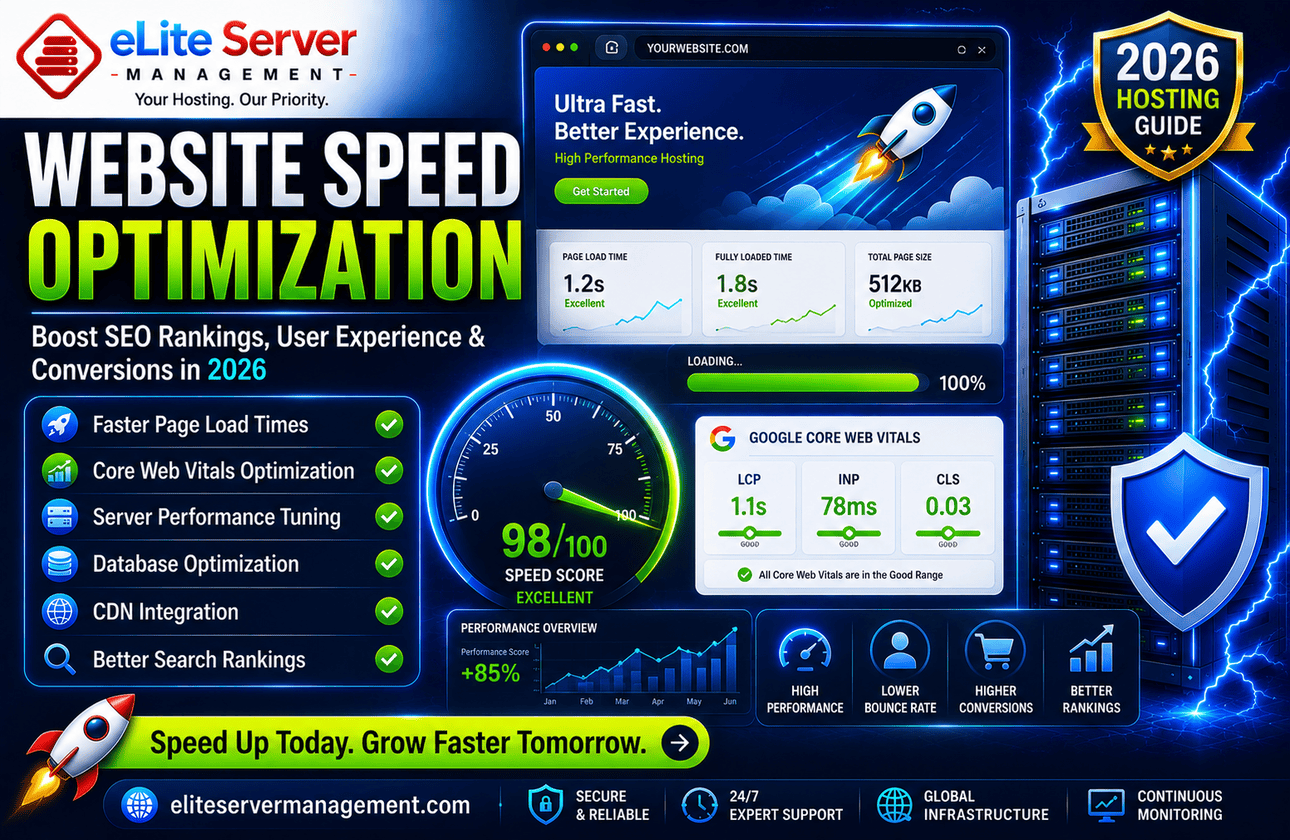
Google uses performance metrics as part of its ranking signals through Core Web Vitals.
Key performance indicators include:
Largest Contentful Paint (LCP)
Measures how quickly primary content loads.
Interaction to Next Paint (INP)
Measures responsiveness to user interactions.
Cumulative Layout Shift (CLS)
Measures visual stability during page loading.
Optimizing these metrics can improve search visibility and organic traffic.
Common Causes of Slow Websites
Several factors contribute to poor performance:
Unoptimized Hosting
Low-quality hosting infrastructure often becomes a bottleneck.
Overloaded Servers
Resource contention affects loading speeds.
Poor Database Performance
Large or poorly optimized databases slow application response times.
Excessive Plugins
Too many plugins can increase resource consumption.
Large Images
Oversized images significantly increase page load times.
Lack of Caching
Without caching, websites repeatedly generate content dynamically.
Hosting Infrastructure and Performance
Your hosting environment plays a major role in website speed.
Businesses relying on performance-sensitive applications should consider:
NVMe Dedicated Servers
Managed Dedicated Hosting
Optimized VPS Infrastructure
Performance Monitoring Services
Related Services:
https://eliteservermanagement.com/nvme-dedicated-server.php
https://eliteservermanagement.com/managed-dedicated-server.php
https://eliteservermanagement.com/ssd-vps-server.php
Server Optimization Best Practices
Optimize Web Server Configuration
Proper tuning of Apache, LiteSpeed, or Nginx improves response times.
PHP Optimization
Use modern PHP versions and optimized configurations.
Database Optimization
Regular maintenance improves query efficiency.
Resource Monitoring
Continuous monitoring helps identify bottlenecks.
Related Services:
https://eliteservermanagement.com/proactive-server-management.php
https://eliteservermanagement.com/cpanel-server-monitoring.php
The Role of Content Delivery Networks (CDNs)
CDNs distribute content globally through edge locations.
Benefits include:
Reduced latency
Faster content delivery
Lower server load
Better global performance
Image Optimization
Images often account for the largest portion of a webpage's size.
Best practices include:
Compressing images
Using next-generation formats
Implementing lazy loading
Optimizing dimensions
Caching Strategies
Caching dramatically improves website performance.
Popular methods include:
Browser caching
Server-side caching
Object caching
CDN caching
Proper caching reduces resource usage and improves loading speed.
Why Faster Websites Convert Better
Speed directly influences user behavior.
Fast websites improve:
Engagement
Session duration
Conversion rates
Customer trust
Revenue generation
Visitors are more likely to complete purchases when websites respond quickly.
Monitoring Website Performance
Optimization is an ongoing process.
Businesses should continuously monitor:
Page speed
Resource usage
Server performance
Core Web Vitals
Uptime metrics
Regular audits help maintain optimal performance.
Future of Website Performance in 2026
Emerging trends include:
AI-driven optimization
Automated performance tuning
Edge computing
Advanced caching technologies
Intelligent resource allocation
Organizations embracing these technologies gain competitive advantages through superior user experiences.
Final Thoughts
Website speed optimization remains one of the most impactful investments businesses can make. Faster websites improve SEO rankings, increase conversions, enhance customer satisfaction, and strengthen brand reputation.
By combining optimized hosting infrastructure, proactive monitoring, modern caching, and performance-focused development practices, organizations can create faster and more profitable online experiences in 2026.
For businesses seeking expert server optimization, performance tuning, managed hosting, and proactive infrastructure management, investing in professional website performance services can deliver long-term growth and measurable results.
👉 Contact Our Team: https://eliteservermanagement.com/contact.php